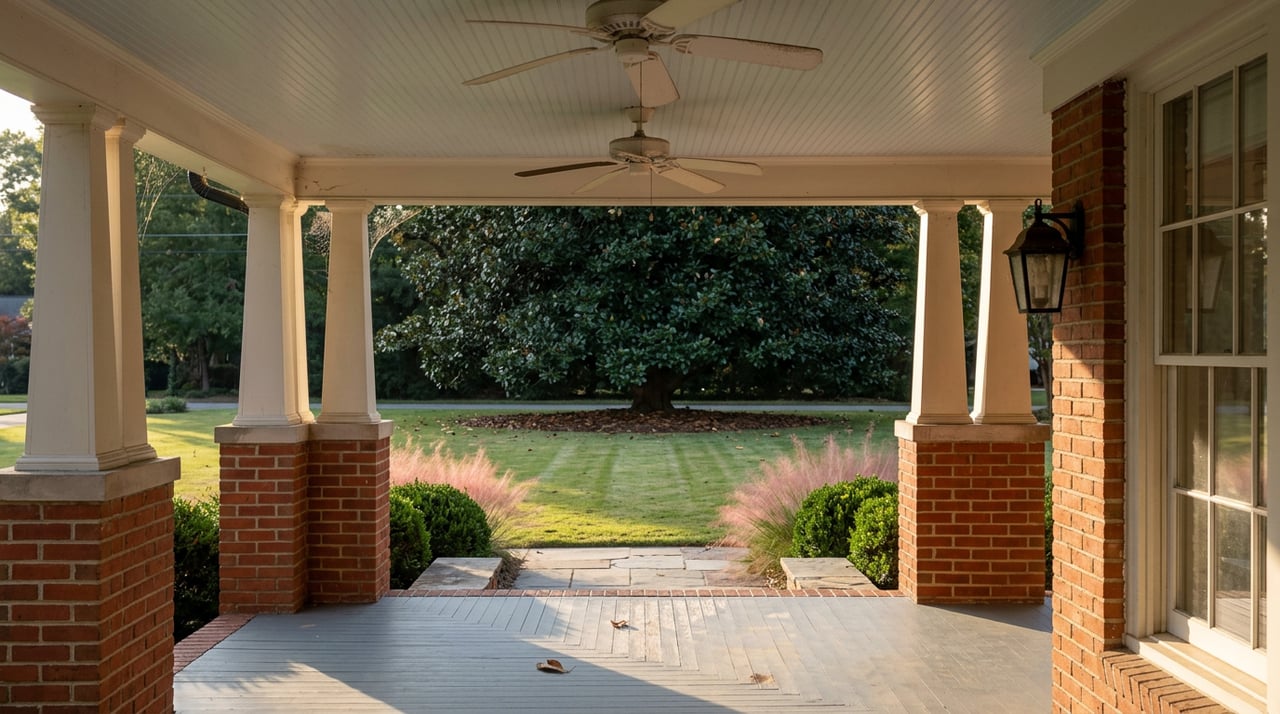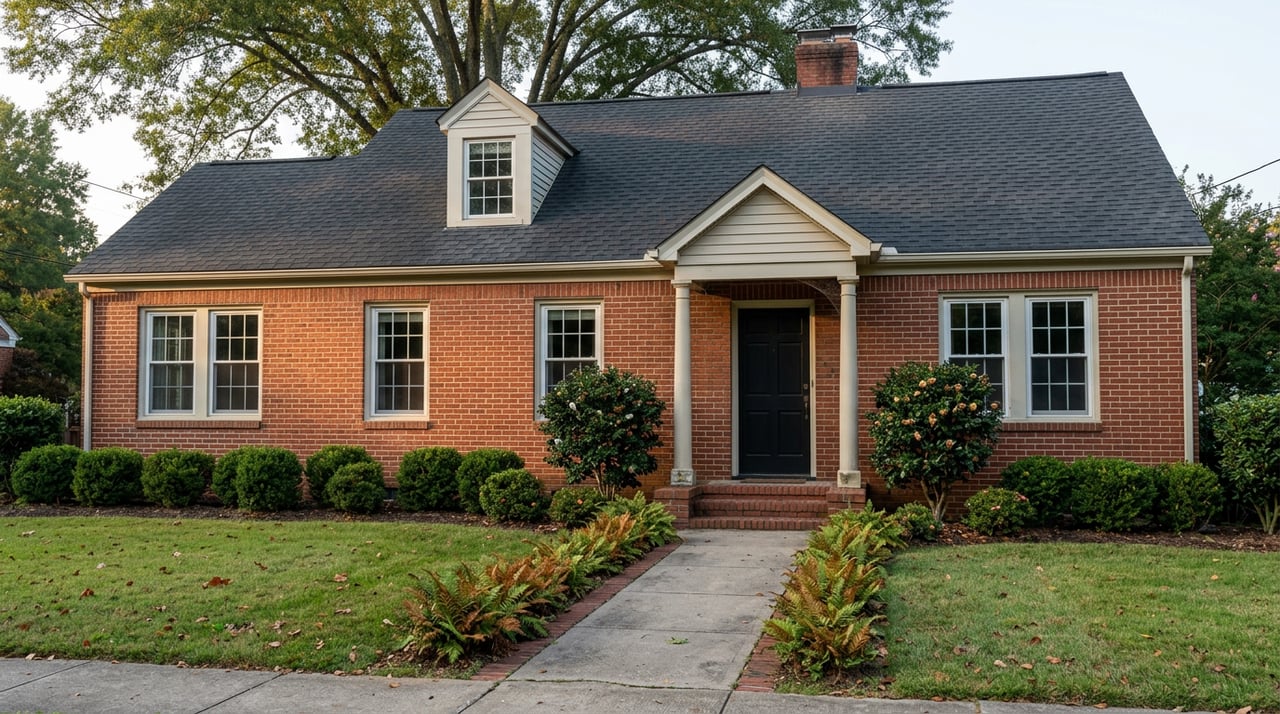
Walk from Fisher Park into Old Irving Park on a Sunday afternoon and the transition barely registers. Same canopy of mature oaks. Same 1920s brick and stucco. Same sense that somebody planned these streets on purpose, because somebody did. What does not carry across that line is the paperwork. A homeowner in Fisher Park who wants to replace a window has to clear it with the city first. A homeowner two streets over in Old Irving Park does not.
That gap catches buyers off guard more often than any inspection finding. It shows up after closing, when a new owner calls a contractor about a porch rebuild or a metal roof and finds out the project needs a permit that has nothing to do with the standard building permit they were expecting.
Three districts carry the rule, not the whole city
Greensboro has three locally zoned historic districts: College Hill, Dunleath, and Fisher Park. In these three, a Certificate of Appropriateness, or COA, is required before any exterior change to a building or the property around it. The city's Historic Preservation Commission, a nine-member board appointed by City Council, reviews the larger projects. Staff can sign off on smaller ones without a full hearing.
Old Irving Park and Sunset Hills are different. Both are recognized on the National Register of Historic Places, which is an honor and a marketing point, not a zoning overlay. National Register listing does not restrict what a private owner can do to their own house. No COA, no design review, no application.
Here is how the two systems compare:
| Neighborhood | Designation type | Exterior changes require a COA? |
|---|---|---|
| College Hill | Local historic district | Yes |
| Dunleath | Local historic district | Yes |
| Fisher Park | Local historic district | Yes |
| Old Irving Park | National Register only | No |
| Sunset Hills | National Register only | No |
Same era of homes, same architectural pedigree, and a genuinely different set of obligations depending on which side of the line the deed falls on.
What actually triggers a COA
The rule is not as sweeping as it sounds once you know what it covers. A COA is required for:
- New windows, doors, or changes to their size and placement
- Replacing siding, especially with a different material
- Fences, walls, and additions
- New construction or major alterations
- Removing a tree at least four inches in diameter measured at breast height
- Satellite dishes, which the standards ask owners to place where they are not visible from the street
A COA is not required for:
- Changing paint color
- Interior remodeling, as long as it does not alter an exterior feature
- Most landscaping, including planting trees and shrubs or clearing brush
There is no fee to apply. That surprises people who assume historic review comes with a permit cost layered on top of everything else. It does not, though it does come with a clock. Once the commission approves a project, the certificate stays in force while work is underway. If a year passes with no progress, the approval expires and the owner has to reapply. Deviating from the approved plan without going back for a new COA is treated as a zoning violation, with civil penalties attached.
Where this changes the renovation math
Siding is where the local-district rule has the most financial bite. The city's design standards recommend repairing original wood siding and trim rather than replacing it, and where replacement is unavoidable, they call for like-kind materials. Fiber-cement and PVC are not recommended substitutes in College Hill, Dunleath, or Fisher Park.
That matters because fiber-cement is the default choice almost everywhere else in the Piedmont Triad for its cost and low maintenance. A buyer comparing a fixer-upper in Fisher Park against a similar-vintage house in Old Irving Park needs to price the renovation differently. One property can be resided with standard fiber-cement board without a second thought. The other may need a COA application, a conversation with city staff about matching profile and reveal, and a wood product that costs more to install and maintain.
The same logic applies to something as small as a new front door. In the three regulated districts, the style and material need to fit the standards. Outside them, the choice is entirely the owner's.
The line between "historic neighborhood" and "historic district" is not a figure of speech in Greensboro. It is the difference between needing city sign-off on a window and not needing one at all.
The rulebook itself just got rewritten
This is not a static set of guidelines from decades past. In September 2025, Greensboro adopted its first substantive revision to the Historic District Program Manual and Design Standards since 2003. The city worked with preservation consultant Gate City Preservation on the update, and held a public drop-in session that August, covered locally by the Rhino Times, to walk residents through the changes and collect feedback before final adoption that fall.
The goals were plain-language clarity, updated guidance on energy efficiency and resilience, and a more usable COA application. For anyone buying into College Hill, Dunleath, or Fisher Park today, this is the version of the rules that governs their project, not the older manual that circulated for twenty years. If a seller or a contractor references standards from before 2025, it is worth confirming they are looking at the current document.
What this means before you make an offer
If a house sits in College Hill, Dunleath, or Fisher Park, build the COA process into your timeline the same way you would a septic inspection on a rural property. It is not a barrier to buying the house. It is a step to plan around, and one that can shape which improvements make sense in year one versus later.
If the house is in Old Irving Park or Sunset Hills, the National Register designation is worth appreciating for what it is: recognition of the neighborhood's architecture and history, plus eligibility for certain rehabilitation tax credits on landmark properties. It does not obligate you to clear a paint color or a new fence with anyone.
Either way, the Historic Preservation Commission has zero authority over whether a home can be sold. Its review only touches exterior work. A pending or unresolved COA question should not stall a closing, but if a seller in a regulated district has done recent exterior work, it is a fair question to ask whether it went through the process. Unpermitted changes in these districts can carry civil penalties that follow the property, not just the person who did the work.
A few common questions
How do I find out if a specific address is in one of the three regulated districts? The city maintains an interactive map of College Hill, Dunleath, and Fisher Park boundaries, and city planning staff can confirm a specific parcel by phone.
Does a COA apply to work I can't see from the street? The requirement is tied to exterior changes generally, though the standards give the most attention to features visible from the public right of way, like street-facing windows, siding, and fences.
Can the city make me undo interior renovations? No. Certificate of Appropriateness review is limited to the exterior. Kitchen and bathroom remodels are outside its scope unless they change something like a window opening on an exterior wall.
Are there financial upsides to owning in a regulated historic district? Landmark properties may qualify for a partial property tax deferral, and rehabilitation work on qualifying historic properties can be eligible for state and federal tax credits. Whether a specific project qualifies depends on the details, so that conversation belongs with a tax professional before the renovation budget gets set.
Buying or renovating in one of Greensboro's historic neighborhoods is not harder than buying anywhere else in the Piedmont Triad. It is different, and the difference depends on which three streets you are standing on. If you are weighing a place in College Hill, Dunleath, Fisher Park, Old Irving Park, or Sunset Hills and want to know exactly what the COA process would mean for your plans, River Lake Homes can walk through the specifics with you before you write an offer.