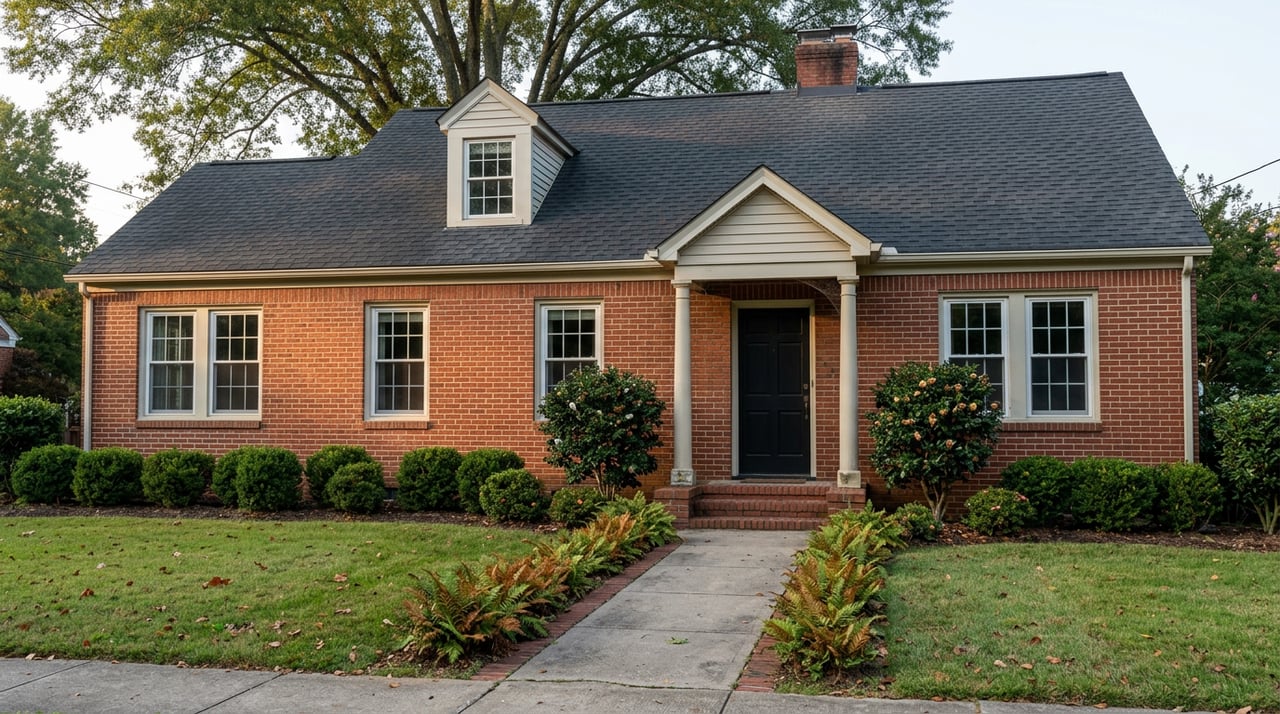
"Summerfield does not have any public water or sewer services." That's not marketing language. It's a line straight from the town's own FAQ page. Every house in Summerfield, whether it's a brick ranch on two acres or a custom build tucked into a wooded cul-de-sac, answers to a well and a septic permit instead of a utility account.
If you've read a septic guide before landing on this one, you already know the basics: get it inspected, budget a few hundred dollars, don't flush what you shouldn't. What most of those guides skip is the part that actually derails closings in a town like this one. It's rarely the tank. It's the paperwork that's supposed to describe the tank.
The number that outranks the pump-out
North Carolina brokers are required to verify that the number of bedrooms advertised in a listing matches the bedroom count on the septic permit filed with the county, and to attach a copy of that permit to the MLS listing itself. That rule exists because a septic system is engineered and permitted for a specific number of bedrooms, which translates directly to a specific volume of daily wastewater. Add a bedroom without updating the permit, and the house is legally out of step with the system underneath it, even if the tank has never backed up once.
One current Summerfield listing makes the point plainly: the home is being marketed and lived in as a three-bedroom, but the septic permit on file covers only two. Nothing about that mismatch means the system is failing. It means the paperwork and the house stopped agreeing with each other at some point, probably when a room was finished or converted without anyone circling back to the county. For a buyer using financing, that gap can stall an appraisal or a loan file, since a lender is underwriting the house description, not just the plumbing. Clearing it usually means a new evaluation from the county before the septic permit can be updated, and that evaluation runs on the county's schedule, not the closing date on the contract.
The inspection itself carries its own rule that catches people off guard. Since January 1, 2008, North Carolina law has required that any septic inspection performed as part of a real estate transaction be done by an inspector certified through the North Carolina Onsite Wastewater Contractors and Inspectors Certification Board, known as NCOWCICB. A general home inspector can walk the yard and note a soggy patch. A licensed plumber can fix a broken line. Neither one can legally sign the point-of-sale report a lender will accept. You can confirm an inspector's certification before hiring anyone, and it's worth doing, because the wrong signature on the report means doing the inspection over.
Why there's no city water to fall back on
The absence of public utilities isn't a footnote. It shapes what a well actually costs to drill and what a buyer should expect to find in a well completion report. Summerfield's own Comprehensive Plan cites local water and sewer consultant Jim Beeson on the specifics: average depth to bedrock in town runs 90 to 130 feet, with the water table sitting around 40 feet down. Beeson points to a USGS finding that the saprolite under Summerfield holds roughly a million gallons of water per acre on average, but that water moves so slowly through the saprolite that a reliable well has to be drilled into the bedrock itself and hit a fracture to produce.
That single detail explains a lot of the variation buyers notice between one Summerfield lot and the next. A municipal water hookup costs roughly the same no matter which street you're on. A well doesn't. Depth, yield, and drilling cost depend on where the fracture happens to sit under that specific parcel, which is exactly why a well completion report and a documented yield test matter more here than in a neighborhood with a city meter at the curb.
Some subdivisions sidestep private wells altogether through community well systems owned and operated by a private utility rather than the town. According to Summerfield's FAQ, the most common operator of these systems is Aqua, though the town advises checking with a property's homeowners association to confirm which company actually serves a given neighborhood, since not every community system shares the same provider.
What the clay does underground
Guilford County sits on the Carolina Slate Belt, and the soil under most of Summerfield is Piedmont red clay that drains slowly compared to sandier soils elsewhere in the state. Local septic guidance for the county notes that Guilford's clay-heavy subsoil requires drain fields to be sized larger to compensate, and that tanks can fill faster than expected when a field underperforms during a wet season. An older system permitted decades ago, sized to the standards and household habits of that era, can end up working harder than its original design intended once a home changes hands, adds residents, or goes through a stretch of heavy rain.
Guilford County also sets specific separation requirements for private wells: a minimum of 50 feet from any septic tank and 100 feet from a drain field or soil absorption system. On a lot with mature landscaping and an older septic layout, confirming those setbacks before finalizing a building plan or an addition is a step worth taking early rather than discovering a conflict after the fact.
The infrastructure question isn't settled yet
The idea of bringing city water and sewer into Summerfield has come up before. In 2020, developer David Couch presented the town council with plans tied to a working farm stretching from Pleasant Ridge Road to I-73, floating a multi-jurisdictional agreement with Greensboro that could bring public utilities to a large new development. That proposal generated real debate in town and never resolved into service actually reaching Summerfield lots.
A Greensboro annexation filing from January 2026 shows how far that infrastructure still has to travel for at least one property near Summerfield's edge that's currently under review for annexation into Greensboro. The nearest potential water connection for that property sits at a line being extended along Carlson Dairy Road, and reaching the site would still require roughly 30,000 linear feet of new water main. Sewer service would need a pump station and a combined 65,000 linear feet of additional pipe to reach the nearest available connection on Horse Pen Creek Road. For existing homes across most of Summerfield, that means wells and septic systems remain the standard, not a temporary condition waiting on a project with a finish date.
Getting ready to buy or sell here
A few steps make the difference between a smooth closing and a delayed one.
- Pull the septic permit from the county before listing, and confirm the bedroom count on the permit matches how the home is actually used.
- Schedule an NCOWCICB-certified inspector rather than assuming a general home inspection covers the septic system.
- Locate and uncover tank lids ahead of the inspection. Buried access adds time and cost to the visit.
- Ask for the well completion report and any available yield data if the property is on a private well rather than a community system.
- Budget for the inspection itself. As of 2026, a typical septic inspection in Guilford County runs roughly $250 to $700, and routine pumping across North Carolina generally falls between $245 and $900 depending on tank size and access.
A few common questions
Does every home in Summerfield use a well and septic system? Most do. Some neighborhoods are served by a privately owned community well system rather than an individual well, but the town itself provides no public water or sewer connection to any property.
Who is legally allowed to inspect a septic system during a home sale in North Carolina? Only an inspector certified through NCOWCICB can perform the point-of-sale inspection a lender will accept. A general home inspector or a licensed plumber cannot sign that report.
What happens if the septic permit doesn't match the number of bedrooms in the house? The county typically needs to re-evaluate the system before the permit can be updated to reflect the actual bedroom count, which can affect financing timelines. Resolving it before listing avoids surprises during a buyer's due diligence period.
Septic permits, well reports, and bedroom counts sound like small print until one of them holds up your closing date. River Lake Homes works Summerfield and the rest of Rockingham County and the Piedmont Triad with an on-site wastewater inspector credential on staff, which means these details tend to get caught early instead of at the worst possible moment. Contact Us to talk through what a specific Summerfield property needs before you list it or make an offer.