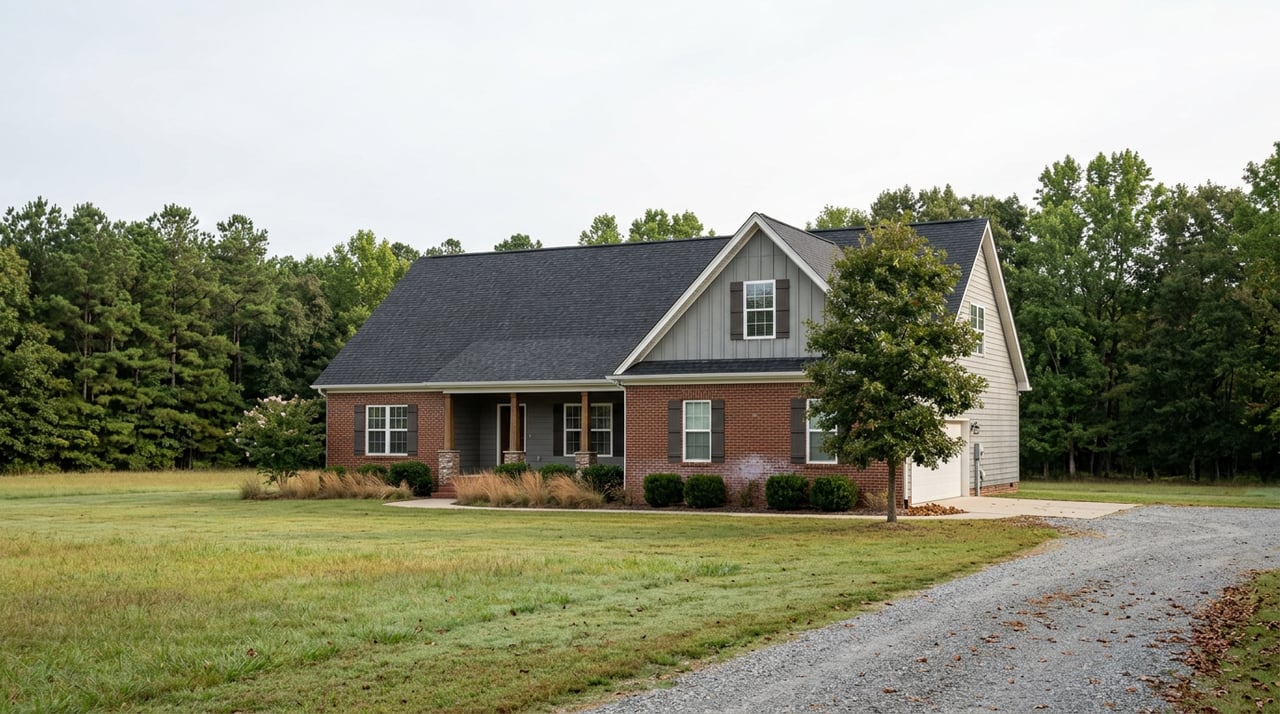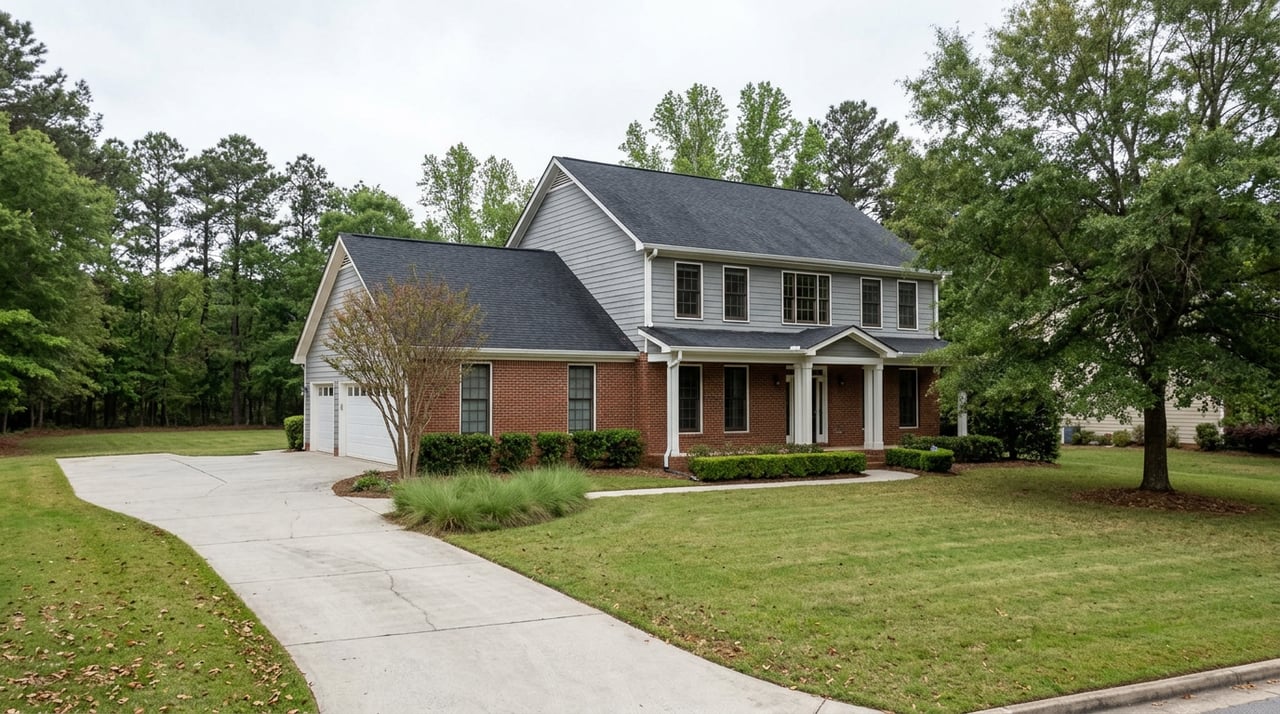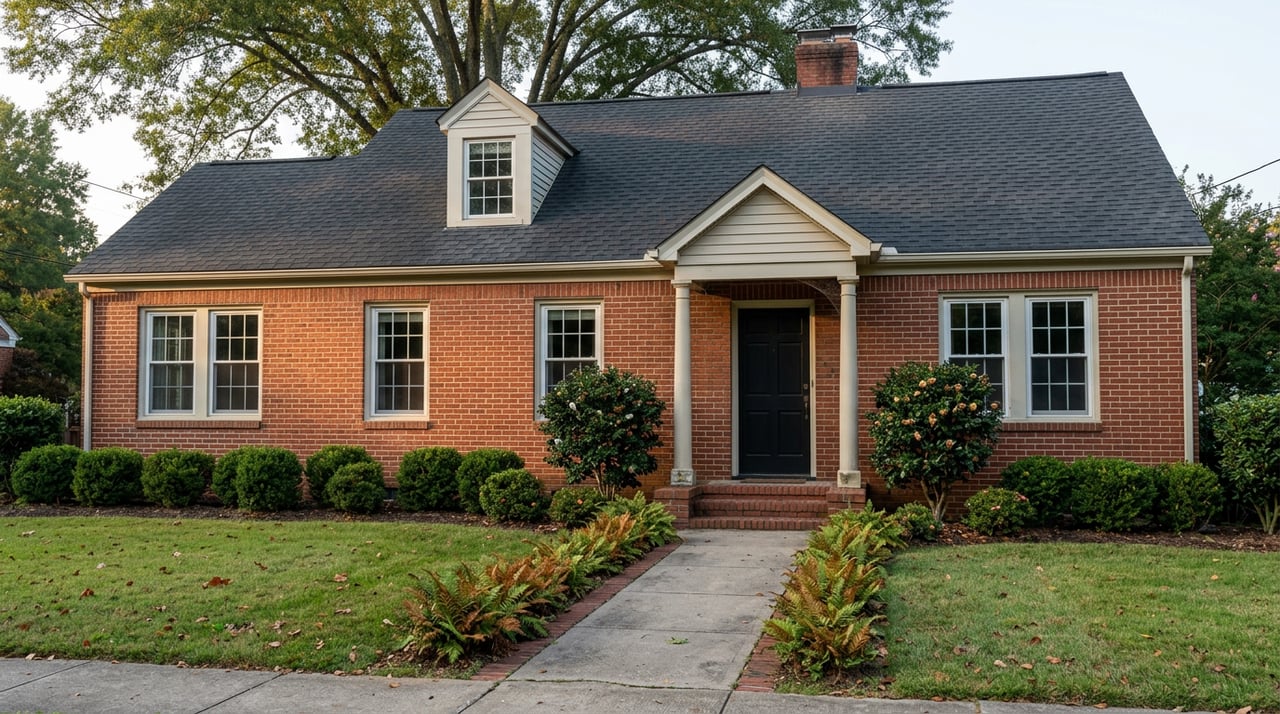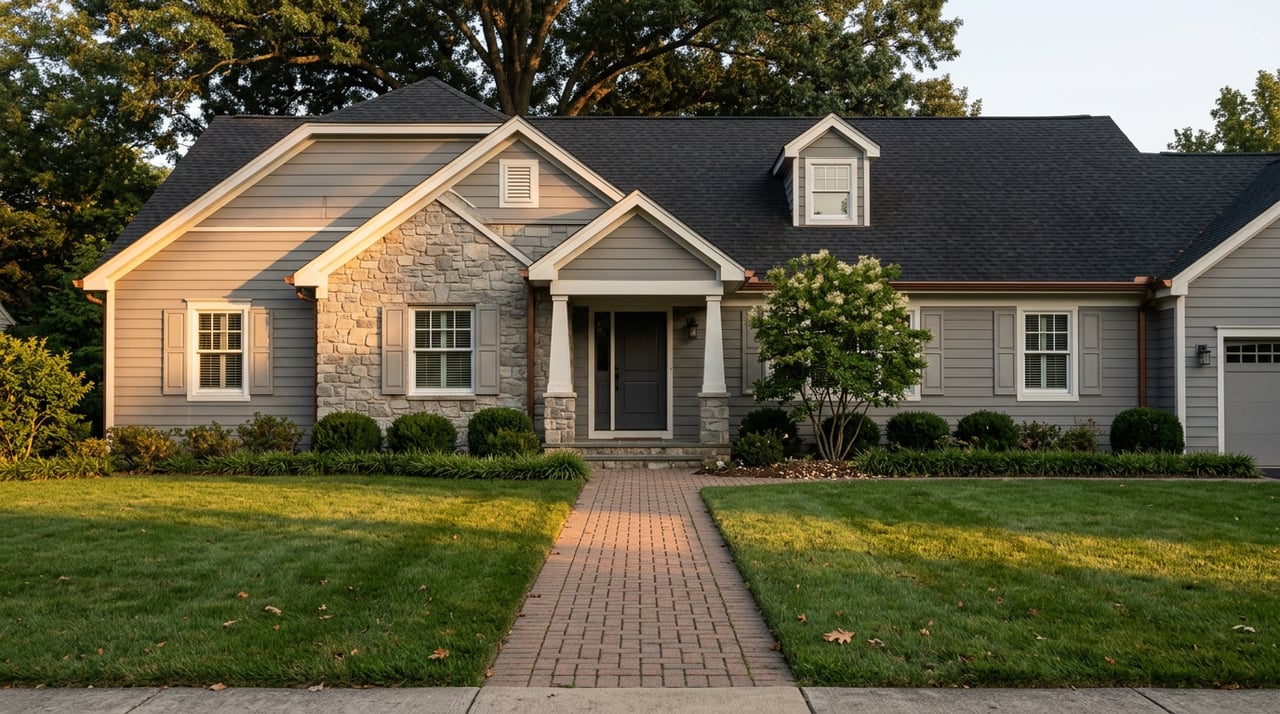
Drive NC 150 through Oak Ridge right now and you will pass a water tower going up behind Town Hall, work crews along the road shoulder, and at least three subdivision entrance signs advertising new homes from the high $400s. A few miles away, on a road with no curb and no streetlight, sits a brick ranch on two acres with its own well and its own septic field, listed at a price that would buy two of the new houses' worth of square footage but on a lot ten times the size.
Buyers comparing those two options usually assume they are choosing between styles. They are actually choosing between two different zoning categories, and the town's own ordinance explains why the math never lines up the way the portals suggest.
What the Ordinance Actually Says
Oak Ridge names its single-family residential districts after their minimum lot size. RS-40 requires 40,000 square feet, RS-30 requires 30,000. Neither number is arbitrary. Both districts exist for a specific reason spelled out in the code itself: they cover
large lots in areas without access to public water and wastewater services.
RS-40 caps density at roughly one home per acre. That is not a lifestyle choice the town is protecting. It is a public health requirement. A lot with no municipal water and no sewer line needs enough ground to safely site a private well and a septic drainfield, with room for a backup field if the first one fails. Smaller lots simply cannot support that infrastructure safely, so the town does not permit them there.
Which means the real dividing line running through Oak Ridge isn't a school boundary or a subdivision name. It's whether a parcel has access to public water and wastewater service. Everything else, including the price gap buyers keep noticing between resale and new construction, follows from that one fact.
The Line Is Already Being Redrawn
That line is not fixed. The Town of Oak Ridge is currently building a water tower behind Town Hall and extending a water main down NC 150 from the Forsyth County line to Linville Road, then along Linville Road to the fire department. Where that line reaches, the water-and-wastewater condition that locks a parcel into RS-30 or RS-40 no longer applies, and smaller-lot development becomes possible.
There's a second, less visible path to the same result. Oak Ridge's own water program also takes ownership of community wells built inside new developments, with eventual connections extended to other residents. In practice, a builder does not have to wait for the town's backbone line to physically reach a tract. If a development installs its own community water system that meets the town's standard, that system can satisfy the same "access to public water and wastewater services" language the RS-30 and RS-40 districts are written around, opening the door to smaller lots and higher density years before the municipal main arrives.
This is the quiet mechanism behind every new subdivision sign you pass on NC 150. It is not that builders found cheaper dirt. It is that they found, or built, a qualifying water and sewer system that let them subdivide at a density the surrounding well-and-septic parcels are legally barred from matching.
What This Actually Costs You at the Closing Table
Here is where the zoning story turns into a pricing story, and where the two numbers that never seem to agree finally make sense.
Zillow's home value index put the average Oak Ridge home at $604,324 as of its May 31, 2026 update, up just 0.4 percent over the prior year. Movoto's own tracking shows something very different for the same market: a median closed sale price of $776,959 in July 2026, across 69 homes sold that month, up from 64 the year before, with an average of 76 days on market.
That roughly $172,000 spread is not two sites disagreeing about the same thing. It's two different slices of the same town. The Zillow figure averages the full existing housing stock, which includes decades of RS-30 and RS-40 homes sitting on private wells and septic systems, many built long before the town ever discussed a water main. The Movoto figure reflects what is actually closing this month, which increasingly means either updated resale or new construction sitting inside a qualifying water and sewer footprint.
Inside that new-construction layer, the base prices tell their own story:
- Honeycutt Reserve, built by Garman Homes near Lake Brandt, has advertised its Bold & Beautiful floor plan from $474,990.
- Thatcher Woods, built by D.R. Horton, has listed plans ranging from the Fleetwood at $508,990 to the Washington at $571,990.
- Preserve at Carriage Cove, built by Keystone Homes, has listed its Hanover Lux plan from $619,990, with individual finished homes in the community priced well above that, including one listed at $713,388.
None of those base numbers include a lot premium, a design center upgrade, or a finished basement. A real closing at 6739 Honeycutt Reserve Dr, a 4-bedroom, 3.5-bath home of about 3,062 square feet, sold for $605,000 in August 2025, well above the community's advertised starting price. The base price is the anchor a builder wants you to negotiate from. The clearing price is what buyers are actually paying once the options sheet is filled out.
So when a resale seller with a 1990s well-and-septic home on RS-40 land looks at the town's $776,959 median and assumes their similarly sized house should command close to that number, they're pricing against a different product. Their buyer pool is smaller, their lot carries maintenance obligations a serviced lot doesn't, and their comparable sales are other well-and-septic resales, not new-construction closings inside the expanding service area.
What to Check Before You Write an Offer
If you're comparing a resale home to new construction in Oak Ridge, the water and sewer question deserves the same attention buyers usually reserve for the kitchen and the roof.
For an older home, ask directly whether it's served by a private well and septic system or by a connection inside the town's growing service area. If it's septic, ask for the most recent inspection and the size of the drainfield relative to the number of bedrooms, since an undersized system can limit future additions. Oak Ridge's own subdivision rules require a health drawing evaluating on-site sewage suitability for every lot without sewer access, and any lot found unsuitable gets flagged directly on the plat as ineligible for a permit. That history is worth pulling before you fall in love with a floor plan.
For new construction, ask whether the community's water comes from a connection to the town's expanding main or from a standalone community well the developer built and the town has since taken over. Either can work fine day to day, but they carry different long-term maintenance and rate structures, and it's a fair question to put directly to the builder's sales office.
A Few Practical Questions
Does RS-30 or RS-40 zoning mean a lot can never be subdivided?
Not permanently. If public water and wastewater service is extended to a parcel, or a qualifying community system is installed, the underlying rationale for the large-lot minimum no longer applies and rezoning becomes possible. That is effectively what has already happened around the town's newest subdivisions.
Why did Movoto's median jump so much compared to Zillow's average?
They're measuring different things. Zillow's index reflects the value of the town's entire existing housing stock, most of which predates the current water and sewer expansion. Movoto's number reflects only what actually closed in July 2026, a mix that leans more heavily toward newer, smaller-lot, service-connected homes.
Is a lower new-construction base price actually a better deal than an older resale home?
It depends on what you value. A base-priced new build gets you a warranty and modern systems on a smaller lot inside a growing service area. An older resale on a well and septic system on RS-30 or RS-40 land gets you significantly more ground and often more privacy, at the cost of taking on that infrastructure yourself. Neither is automatically the better financial decision. It's a tradeoff worth pricing out line by line rather than assuming the sticker price tells the whole story.
If you're weighing a new-construction contract against a well-and-septic resale in Oak Ridge, or trying to figure out what a specific lot's zoning actually allows, River Lake Homes can walk through the comparison with you, drainfield records and all. Contact Us to start the conversation before you write an offer.